The Sea Keeps Its Own Time
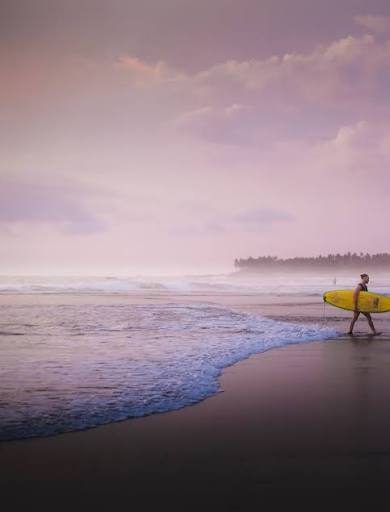
A long-form island poem about memory, migration, inheritance, and the patient rhythm of the Caribbean Sea.
At five in the morning,
before the first bus complains awake,
before the bakery lifts its metal eyelids,
the sea is already speaking.
Not loudly.
It does not need the theatre of thunder
to prove that it has power.
It folds one silver sentence
after another against the shore,
then takes each word back
before anyone can claim to have understood.
My grandmother said the sea keeps its own time.
She said clocks were invented
by people who had forgotten how to watch light
move across a kitchen wall.
She measured mornings by kettle whistle,
afternoons by the angle of shade
beneath the tamarind tree,
and evenings by the first mosquito
brave enough to sing near her ear.
When she spoke of leaving,
she never called it migration.
She said, I went away for work.
As though distance were an errand.
As though an ocean could be crossed
and folded neatly into a handbag
beside a passport,
two photographs,
and the address of a cousin
who promised a spare room.
She carried the island with her anyway:
salt caught in the grammar of her voice,
bush tea wrapped inside newspaper,
a Sunday dress too bright
for the grey city where she arrived,
and a stubborn belief
that no winter could last forever.
Years later she returned
with careful shoes and quieter hands.
The village had changed its face.
Houses climbed hills
where goats once argued with the wind.
Children answered in accents
borrowed from television.
The old shop had become a parking lot,
and the road that knew every footstep
had been widened until it forgot.
Still, the sea recognized her.
It touched her ankles
with the same cool familiarity,
lifted a hem of foam,
and for one brief moment
she was young again,
standing at the edge of departure,
believing every horizon
was a promise.
I think of her whenever I travel.
Airports teach us to become temporary:
remove your belt,
empty your pockets,
place your history in a plastic tray.
Declare what you carry.
Explain why you are here.
Prove that you intend to leave.
But no form asks about the invisible luggage:
the names we inherit,
the grief we disguise as ambition,
the recipes that become inaccurate
because nobody wrote them down,
the songs we hum without knowing
who first survived long enough to sing them.
The sea knows.
It has watched ships arrive
with flags, chains, contracts, cameras,
missionaries, merchants, soldiers,
dreamers, fugitives, tourists,
and people simply trying to begin again.
It has watched us rename the same coast,
divide the same hills,
draw borders through water
and pretend the tide will obey.
Yet every evening
the sea returns the sun to darkness
without asking who owns the view.
Every morning
it begins again.
Perhaps that is why island people
learn both patience and urgency.
We know a storm can rewrite a lifetime
before breakfast.
We know roofs can vanish,
roads can become rivers,
and the tree planted by a great-grandfather
can fall without ceremony.
We also know rebuilding.
We know how neighbours arrive
carrying hammers, extension cords,
ice, bread, news, and jokes.
We know how a generator becomes a gathering place.
We know how one pot can feed
more people than mathematics allows.
We know that mourning and laughter
often sit at the same table.
The sea keeps its own time,
but it teaches us to count differently:
not only years,
but returns;
not only losses,
but what was carried forward;
not only distance,
but the voices that still reach us
across it.
Tonight the moon lays a pale road
over the water.
Somewhere beyond sight,
another island is listening
to the same waves.
Somewhere a woman packs a suitcase.
Somewhere a child asks
whether home is where you are born
or where your name is pronounced correctly.
Somewhere an old man stands on a balcony
and smells rain before it arrives.
The sea answers none of them directly.
It simply continues,
holding every shore
without belonging to one,
keeping every memory
without refusing the future,
moving forward
by returning,
returning,
returning.
before the first bus complains awake,
before the bakery lifts its metal eyelids,
the sea is already speaking.
Not loudly.
It does not need the theatre of thunder
to prove that it has power.
It folds one silver sentence
after another against the shore,
then takes each word back
before anyone can claim to have understood.
My grandmother said the sea keeps its own time.
She said clocks were invented
by people who had forgotten how to watch light
move across a kitchen wall.
She measured mornings by kettle whistle,
afternoons by the angle of shade
beneath the tamarind tree,
and evenings by the first mosquito
brave enough to sing near her ear.
When she spoke of leaving,
she never called it migration.
She said, I went away for work.
As though distance were an errand.
As though an ocean could be crossed
and folded neatly into a handbag
beside a passport,
two photographs,
and the address of a cousin
who promised a spare room.
She carried the island with her anyway:
salt caught in the grammar of her voice,
bush tea wrapped inside newspaper,
a Sunday dress too bright
for the grey city where she arrived,
and a stubborn belief
that no winter could last forever.
Years later she returned
with careful shoes and quieter hands.
The village had changed its face.
Houses climbed hills
where goats once argued with the wind.
Children answered in accents
borrowed from television.
The old shop had become a parking lot,
and the road that knew every footstep
had been widened until it forgot.
Still, the sea recognized her.
It touched her ankles
with the same cool familiarity,
lifted a hem of foam,
and for one brief moment
she was young again,
standing at the edge of departure,
believing every horizon
was a promise.
I think of her whenever I travel.
Airports teach us to become temporary:
remove your belt,
empty your pockets,
place your history in a plastic tray.
Declare what you carry.
Explain why you are here.
Prove that you intend to leave.
But no form asks about the invisible luggage:
the names we inherit,
the grief we disguise as ambition,
the recipes that become inaccurate
because nobody wrote them down,
the songs we hum without knowing
who first survived long enough to sing them.
The sea knows.
It has watched ships arrive
with flags, chains, contracts, cameras,
missionaries, merchants, soldiers,
dreamers, fugitives, tourists,
and people simply trying to begin again.
It has watched us rename the same coast,
divide the same hills,
draw borders through water
and pretend the tide will obey.
Yet every evening
the sea returns the sun to darkness
without asking who owns the view.
Every morning
it begins again.
Perhaps that is why island people
learn both patience and urgency.
We know a storm can rewrite a lifetime
before breakfast.
We know roofs can vanish,
roads can become rivers,
and the tree planted by a great-grandfather
can fall without ceremony.
We also know rebuilding.
We know how neighbours arrive
carrying hammers, extension cords,
ice, bread, news, and jokes.
We know how a generator becomes a gathering place.
We know how one pot can feed
more people than mathematics allows.
We know that mourning and laughter
often sit at the same table.
The sea keeps its own time,
but it teaches us to count differently:
not only years,
but returns;
not only losses,
but what was carried forward;
not only distance,
but the voices that still reach us
across it.
Tonight the moon lays a pale road
over the water.
Somewhere beyond sight,
another island is listening
to the same waves.
Somewhere a woman packs a suitcase.
Somewhere a child asks
whether home is where you are born
or where your name is pronounced correctly.
Somewhere an old man stands on a balcony
and smells rain before it arrives.
The sea answers none of them directly.
It simply continues,
holding every shore
without belonging to one,
keeping every memory
without refusing the future,
moving forward
by returning,
returning,
returning.